How Traders Are Blending Signals for Smarter Strategies
Author : Ranga Technologies
Publish Date : 5 / 18 / 2026 • 2 mins read
Last Updated : 5 / 18 / 2026
Why are traders using three, four, or even five confirmations before taking a single trade?
And why are many classic “one-indicator strategies” suddenly struggling in modern markets?
Because the market structure itself has changed.
Today’s U.S. markets move differently compared to even a few years ago. Intraday price movement is now heavily influenced by:
-
options flow activity
-
liquidity fragmentation
-
macroeconomic headlines
-
AI-assisted trading systems
-
overnight futures movement
As a result, experienced traders are no longer relying on isolated signals like RSI oversold or MACD crossover alone. Instead, they are blending multiple signals together to build smarter, more adaptive trading systems, and AI-powered Pine Script generation is becoming a major part of that process.
1. Why Traditional Strategies Are Struggling
For years, many traders built strategies around one “main signal.”
Examples:
-
RSI below 30
-
MACD crossover
-
moving average crossover
-
Bollinger Band rejection
-
stochastic divergence
And during certain market conditions, these strategies worked reasonably well.
But in 2025, markets behave differently.
Price movement is now affected by:
-
options expiration flows
-
high-frequency algorithmic activity
-
overnight futures volatility
-
macroeconomic news reactions
This creates a serious issue for single-indicator systems.
An RSI oversold signal may appear:
-
during aggressive trend continuation
-
inside panic-driven volatility
-
during low liquidity conditions
-
before another sharp move downward
So the signal itself is not necessarily “wrong.” The environment around the signal has changed. That is why traders are moving toward multi-layered confirmation systems instead of isolated indicator triggers.
2. What Signal Blending Actually Means
Signal blending means combining multiple market conditions together before executing a trade.
Instead of saying: “RSI is oversold, so buy.”
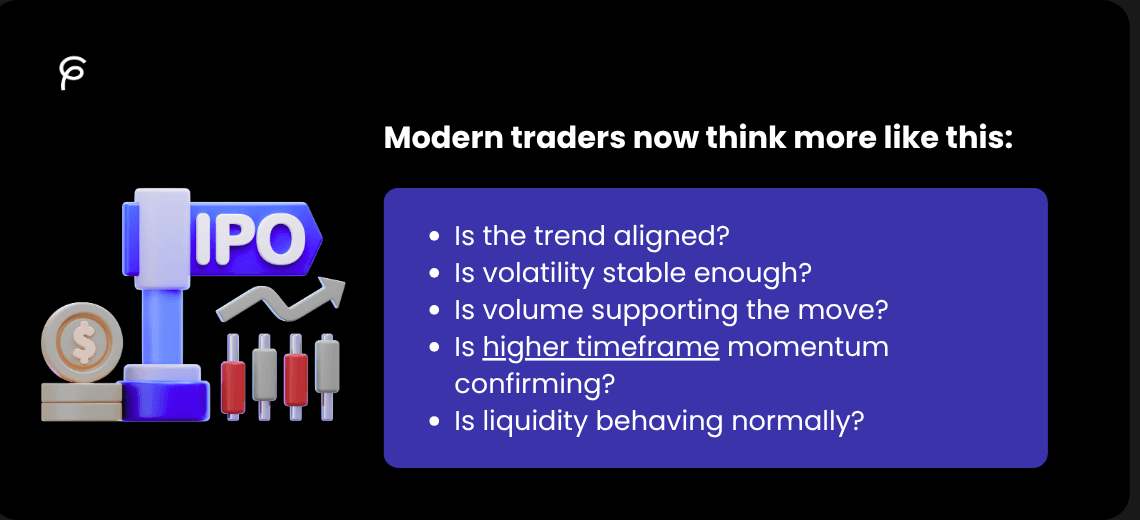
Modern traders now think more like this:
-
Is the trend aligned?
-
Is volatility stable enough?
-
Is volume supporting the move?
-
Is higher timeframe momentum confirming?
-
Is liquidity behaving normally?
Only when several conditions align does the trade become valid.
This creates a more selective strategy structure.
The goal is not simply adding more indicators.
The goal is improving:
-
trade quality
-
execution consistency
-
market context awareness
-
false signal filtering
In other words: Traders are trying to reduce bad trades instead of increasing trade frequency.
3. Why Traders Are Combining Signals
3.1. Markets React Faster Than Before
One of the biggest structural changes in modern markets is reaction speed.
Today:
-
economic headlines spread instantly
-
AI-driven systems react within seconds
-
volatility expands much faster
-
liquidity disappears rapidly during uncertainty
This means older “slow confirmation” systems often react too late.
As a result, traders combine:
-
momentum filters
-
volatility measurements
-
volume confirmations
-
to create stronger execution logic.
3.2. False Breakouts Are Increasing
Many traders today complain about:
-
breakout failures
-
stop hunts
-
rapid reversals
-
fake momentum moves
This happens because modern price movement is heavily affected by:
-
liquidity targeting
-
options positioning
-
short-term market maker hedging
Single-indicator breakout systems often cannot detect these conditions properly.
Blended systems attempt to reduce this problem by requiring:
-
momentum confirmation
-
volume participation
-
trend alignment
-
volatility validation
-
before entering trades.
3.3. Market Conditions Change More Frequently
Strategies today must survive:
-
trending conditions
-
ranging markets
-
high-volatility sessions
-
low-volume environments
A strategy built only for one environment often collapses in another.
That is why traders increasingly use adaptive systems instead of static rules.
4. How AI Is Changing Pine Script Strategy Development
The biggest change AI brings is not “automatic profits.” It is development speed.
Before AI:
-
traders manually wrote Pine Script
-
debugging consumed hours
-
testing multiple ideas was slow
-
refining strategies took days
Now AI tools help traders:
-
generate Pine Script faster
-
test more variations quickly
-
debug logic efficiently
-
iterate strategy structures rapidly
This creates a completely different workflow.
Instead of spending hours building one setup manually, traders can now explore multiple strategy structures much faster.
5. Why AI Strategy Iteration Matters
Most profitable strategies are not created in one attempt.
They evolve through:
-
adjustment
-
filtering
-
optimization
-
refinement
The problem is that manual coding slows this process dramatically. AI Pine Script generators speed up experimentation.
This allows traders to:
-
compare different logic combinations
-
test volatility filters
-
adjust risk systems faster
-
refine execution behavior continuously
That is one reason why AI-assisted strategy development is growing rapidly in TradingView communities.
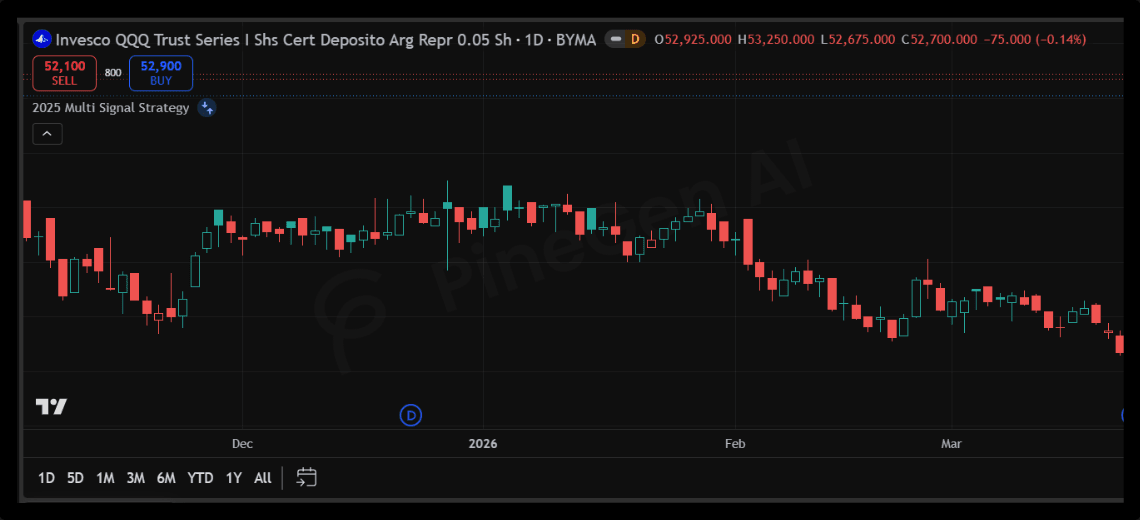
6. Multi-Signal Pine Script Strategy Example
//@version=6
strategy("2025 Multi Signal Strategy", overlay=true)

// Trend Indicators
emaFast = ta.ema(close, 20)
emaSlow = ta.ema(close, 50)

// Momentum
rsiValue = ta.rsi(close, 14)

// Volatility
atrValue = ta.atr(14)

// Volume Confirmation
volumeMA = ta.sma(volume, 20)

// Trend Logic
bullTrend = emaFast > emaSlow

// Momentum Confirmation
bullMomentum = rsiValue > 55

// Volume Strength
bullVolume = volume > volumeMA

// Entry Logic
longCondition = bullTrend and bullMomentum and bullVolume

if longCondition
    strategy.entry("Long", strategy.long)

// Dynamic Risk Management
strategy.exit(
     "Exit Long",
     from_entry="Long",
     stop = close - atrValue * 2,
     limit = close + atrValue * 3
)
This structure reflects how modern traders increasingly build systems:
-
multiple confirmations
-
momentum filtering
-
volume analysis
-
dynamic volatility-based risk management
instead of relying on one isolated indicator.
7. Why PineGen AI Fits Modern Trading Workflows
General AI tools can generate code.
But trading systems require more than syntax.
They require:
-
structured execution logic
-
TradingView-compatible workflows
-
iterative refinement
-
strategy architecture awareness
This is where PineGen AI becomes more relevant for Pine Script development.
8. PineGen AI Is Built Around Trading Workflows
Unlike general-purpose AI tools, PineGen AI focuses specifically on:
-
Pine Script generation
-
TradingView strategy structure
-
debugging workflows
-
multi-iteration development
This matters because modern strategies are no longer simple crossover systems.
They involve:
-
blended indicators
-
volatility filters
-
adaptive logic
-
dynamic risk handling
9. Faster Iteration Means Faster Learning
One major advantage of PineGen AI is workflow speed.
Traders can:
-
generate multiple variations quickly
-
compare strategy structures
-
test confirmation layers faster
-
refine setups continuously
This is important because strategy quality usually comes from refinement, not the first version.
10. PineGen AI Reduces Manual Friction
Many traders spend more time:
-
fixing syntax
-
debugging logic
-
restructuring code
than actually improving strategy quality.
PineGen AI helps reduce that friction so traders can focus more on:
-
market logic
-
execution quality
instead of repetitive coding tasks.
11. Mistakes Traders Still Make with AI Strategies
Even with AI, many traders still fail because they misunderstand what AI actually does.
Overcomplicating Signal Blending
Some traders combine too many indicators together.
This creates:
-
conflicting logic
-
delayed entries
-
overfitted systems
-
inconsistent behavior
Good blended systems are selective, not overloaded.
Blindly Trusting AI Output
AI-generated code still requires:
-
validation
-
testing
-
refinement
Compilation success does not guarantee strategy quality.
Ignoring Market Regime Changes
A system built for trending markets may fail completely during:
-
ranging periods
-
high-volatility news events
-
low-liquidity sessions
Adaptive logic matters more than fixed logic today.
12. Final Conclusion
The trading industry is shifting away from isolated indicator systems. Modern markets are simply too fast, too reactive, and too structurally complex for one-signal strategies to remain reliable consistently.
That is why traders in 2025 are increasingly combining:
-
trend filters
-
momentum confirmation
-
volatility analysis
-
volume participation
AI-assisted strategy development into layered systems designed to adapt better to changing conditions.
But AI itself is not the edge.
The edge comes from:
-
structured logic
-
proper validation
-
continuous refinement
AI only accelerates the process.
The difference between struggling strategies and adaptive trading systems often comes down to workflow quality.
Modern traders are no longer building strategies around one isolated signal.
They are:
-
blending multiple confirmations
-
testing variations rapidly
-
refining execution logic continuously
-
adapting to changing market conditions faster
That process becomes difficult when manual coding slows everything down.
PineGen AI helps traders move from: idea → structured Pine Script → testing → refinement → optimization without getting stuck in endless debugging cycles.
Instead of spending hours manually rewriting TradingView code, use PineGen AI to:
-
generate Pine Script strategies faster
-
combine multiple trading signals efficiently
-
refine logic through faster iterations
-
build TradingView-ready systems with less friction
-
focus more on trading quality instead of repetitive coding work
Start building smarter AI-assisted TradingView strategies with PineGen AI today.